20 HANDY FACTS FOR DUDLEY PAT TESTING AND FIRE EXTINGUISHER SERVICING
Top 10 Tips To Assess The Regulatory Compliance For PAT in Dudley
The UK regulatory framework for Portable Appliance Testing is fundamentally distinct from that of fixed electrical installations and fire safety equipment. Unlike fire extinguisher servicing, which operates under specific British Standards and third-party certification schemes, PAT testing is governed by a broader health and safety framework that emphasizes risk assessment and duty of care rather than mandatory periodic testing schedules. Electricity at Work Regulations 1988, which states that electrical equipment must be maintained for safety purposes, is the main legal requirement. The Regulations are silent on how this should be done, nor do the regulations specify a testing schedule or methodology. This places the onus on the dutyholder (typically the employer) to conduct a suitable and sufficient risk assessment to determine an appropriate maintenance and inspection regime. Compliance, therefore, is not evidenced by a stack of test certificates alone, but by a demonstrable process of risk-based decision-making, competent implementation, and thorough documentation that proves a systematic approach to ensuring electrical safety in the workplace.
1. Electricity at Work Regulations of 1989
Regulation 4(2), of the Electricity at Work Regulations, 1989, is the cornerstone for PAT compliance. It states: "As necessary to prevent dangers, all systems must be maintained to prevent such dangers, as far as it is reasonably practicable." This places an absolute responsibility on employers to maintain all electrical equipment. The term "system" includes portable appliances. In addition, the regulations are not specific about "PAT" testing; rather, they refer to "maintenance," meaning a more general concept, which encompasses visual checks, user tests, and combined testing and inspection. The frequency and types of maintenance are determined not by a rigid legal schedule, but by the risk assessment.
2. Act 1974 on Health and Safety at Work Act 1974
The Health and Safety at Work, etc. The Health and Safety at Work Act 1974 establishes general obligations employers have to employees and others. As per section 2 of Act 1974, employers have to ensure health, safety and welfare for all employees, as far it is reasonable. Electrical equipment is included in the safe operation of electrical systems and plant. This duty is extended to people who are not their employees, including visitors, contractors and members of public. The PAT process is the best way to fulfil these duties because it is structured and provides a method for ensuring safety of electrical equipment.
3. Code of Practice of the IET for Electrical Equipment In-Service Inspections and Testing: Guidance and Best Practice
Although not law, the Institution of Engineering and Technology Code of Practice (IET Code of Practice) is universally recognized as the benchmark of best practice for PAT tests. It provides detailed guidance on implementing a compliant maintenance regime, including:
Definitions of appliance classes and types.
Details procedures for formal inspections of the product and inspections with testing.
Recommended initial frequencies for inspection and testing based on equipment type and operating environment.
Pass/fail criteria for test results.
Courts and Health and Safety Executives (HSE) inspectors use this code as a standard to judge the suitability and sufficiency of a dutyholder’s routine maintenance. The failure to adhere to the overall regulations can be interpreted by courts and inspectors of the Health and Safety Executive (HSE) as deviations from the code.
4. The Primacy of Risk Assessment
HSE has explicitly advocated a PAT-based risk-based testing approach. It is moving away from outdated concepts of blanket annual testing. A risk assessment must be carried out by the dutyholder to determine if inspections and tests are necessary. A number of factors will influence the assessment.
Equipment type. In a low risk environment, a double-insulated appliance (Class II) may only require visual checks. But a class I appliance in an industrial workshop may require formal testing on a regular basis.
Environment: Construction site, warehouses and workshops are environments with high risk. Hotels and offices are usually lower risk.
Users: Is the person using equipment a member of your staff?
Are you familiar with the appliance’s past history?
This risk assessment is what defines a compliant system, not the number of tests performed.
5. The Concept of "Competence" for Testers
Regulation 16 of the Electricity at Work Regulations 1989 requires that persons engaged in work on electrical systems must possess the necessary technical knowledge and experience to avoid danger. For PAT testing, "competence" does not necessarily require a formal qualification, but the tester must have:
Electricity is a subject that requires adequate knowledge.
The ability to work with the system in question and have an understanding of it.
Understanding of the hazards and precautions required.
Ability to correctly interpret and use test results.
While City & Guilds 2377 is a popular qualification that provides excellent training, competence can be achieved through other means. The dutyholder will need to prove that the tester is competent.
6. Documentation and record-keeping requirements
The Electricity at Work Regulations don't require the keeping of records. Regulation 29 however states that proving due diligence and taking all reasonable steps in order to avoid committing the offense is a defence. The primary proof of due diligence is comprehensive records. A compliant records-keeping system includes:
An asset register of equipment.
Documentation of the risk analysis and the maintenance plan.
Detailed reports for each formal inspection and test, including appliance description, test results, pass/fail status, date of next test, and tester's identity.
These records must be readily available for inspection by the HSE or local authorities.
7. Labelling and Identification of Appliances
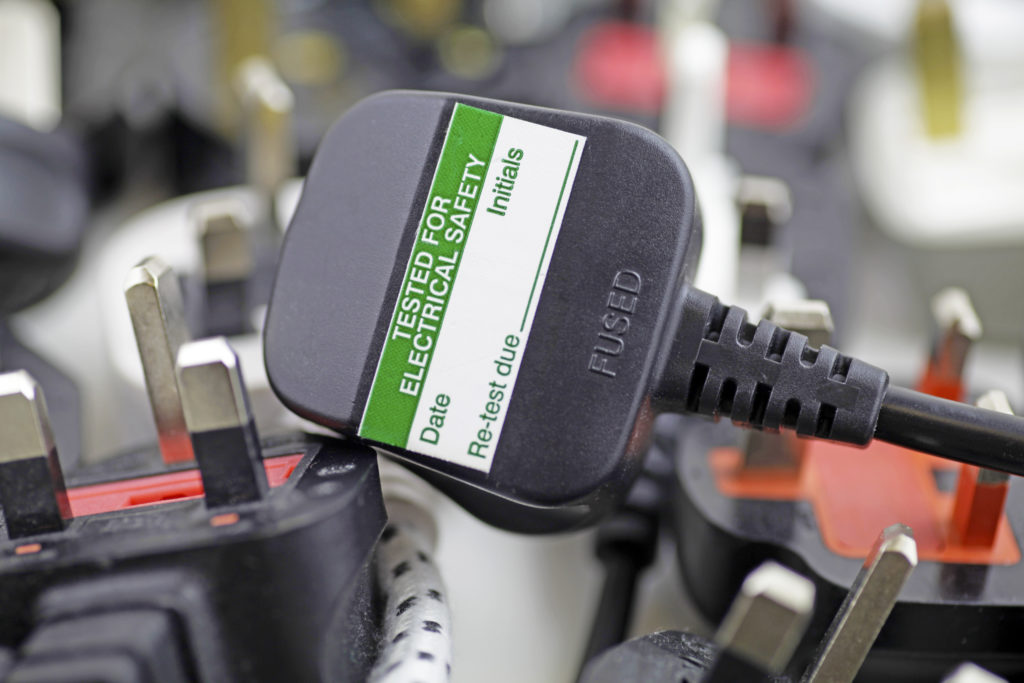
Labelling is an important part of a PAT system that's compliant. Labelling should include the following information for each appliance that has passed a combined formal inspection and test.
A unique asset number that identifies it with the record.
The test date.
Date for next test (or inspection).
The name or identifier of the tester.
The label provides a clear visual indicator of an appliance's compliance status for users and inspectors. Labels are durable, non-metallic and non-conductive.
8. The HSE Enforcement position and "Myth Busting"
The HSE actively works to clarify misconceptions related to PAT testing. They insist that:
No law requires that all equipment be tested annually.
A business can test their products themselves if it has competent staff. It is not required by law to use an outside contractor.
Visual inspection can often be more effective than electronic testing in identifying the majority of faults.
An enforcement official will consider a risk-based strategy. A company that tests its equipment without any support in the form of a risk assessment will be seen as less favourably by an enforcement officer than one who can demonstrate a more robust risk assessment and justify a longer interval between testing for equipment with low risks.
9. Interplay with Other Legislation: PUWER 1998
The Provision and Use of Work Equipment Regulations of 1988 (PUWER), applies also to portable devices. PUWER stipulates that equipment must be fit for its intended purpose, in a safe condition, and inspected regularly to ensure safety. In Regulation 6, inspections are specifically required when the safety of work equipment depends on its installation. The PAT test is a vital method for meeting PUWER’s inspection and maintenance requirements for electrical equipment. This overlaps with the regulatory frameworks.
10. Insurance Implications and Due Diligence
Insurance companies can have their own requirements, even though the law is based upon risk assessment. As a condition to coverage, an insurance policy could stipulate that PATs are conducted by a third party annually. Unable to comply with this requirement could invalidate your claim. In the event of a serious electrical accident, insurers and HSE inspectors will first examine the dutyholder’s PAT test records and risk assessments. A well-documented, risk-based system is the strongest possible evidence of due diligence and a robust defence against prosecution or a invalidated insurance claim. Read the best Dudley PAT testing for more examples.
Ten Tips For Emergency Support For Service For Fire Extinguishers in Dudley
Emergency support for extinguisher service is the primary element of your fire safety conformity, in which the theoretical guidelines are followed with practical urgency. In accordance with the Regulatory reform (Fire Safety) Order of 2005, it is the duty of the responsible person to ensure that all firefighting equipment is in good condition. This means that any breakdown or damage will create an immediate gap in compliance. Support for emergencies is more than just a service that is merely a convenience. They are essential to a comprehensive fire strategy. They impact risk management, as well as the in ensuring the validity of insurance and continuous operations. A provider's emergency response capability–encompassing availability, communication, technician competence, and logistical readiness–reveals their true commitment to client safety beyond routine maintenance. To evaluate these provisions it is essential to look at service level agreements, geographical coverage limitations, as well as the actual implementation of responses promised in real-world scenarios.
1. 24/7/365 Access and Special Emergency Contact Channels in Dudley
An effective emergency response requires constant availability. This requires an emergency contact number that is available 24 hours a day, all year, and that includes every public holiday. It should not be a typical office number that is redirected to voicemail during business hours, but a dedicated hotline answered by live coordinators capable of sending engineers to the scene immediately. It is crucial that the service provider has clear guidelines to deal with calls after hours. If not, a situation reported will not be addressed until the following working day.
2. Timely and clear response to contract is a guarantee in Dudley
A vague promise of"rapid response" or "rapid response" is meaningless without any contractual assurances. Your Service Level Agreement must include clear and precise response levels. For example: Priority one (critical fault affecting multiple unit) Engineer dispatched to the site within four working hours. Priority 2 (Single unit not discharged or missing) site attendance within 24 hours. These tiers need to be clearly defined and are based on risk. Additionally the SLA should define the consequences of consistently failing to meet these targets. This makes a promise an obligation.
3. Local engineer deployment and geo-coverage
Geographic logistics determines the capacity to offer rapid response. A national service provider must have a network of strategically located engineers in order to provide local coverage. Asking specifically about the engineer's availability within your particular postcode is crucial. The provider who has engineers based within your town or region can generally meet a target of four hours. The one who has to dispatch an engineer from a different region is not able to. Understanding their deployment strategies is crucial to determine if the promises they make regarding their response are real.
4. Emergency Services Scope: Assessment, Repair and Replacement in Dudley
The emergency response should be complete. The scope of the service must include an on-site inspection, using of stock that is carried for repairs (such as seals, hoses and pressure cartridges) and, more importantly replacing or denying the use of faulty extinguishers by an adequately stocked van. An engineer's visit to decide on an extinguisher and then an absence and then a visit to replace it is insufficient. It's not effective because it leaves the asset unprotected for a longer time and causes the property to be non-compliant. True emergency response solves issues on the first visit.
5. The Loan Equipment is used during the Resolution Period in Dudley
A premium emergency service will lend equipment for more complex problems that cannot be resolved immediately (e.g. special equipment that requires ordering). This will ensure that your fire safety cover remains in place throughout the resolution process, showing a provider’s commitment towards your continued compliance. It must be stated clearly if there is a fee. What is the loan period? What will the items you loan be managed and tracked by you? This is especially crucial in environments that have a high risk, for instance, in which leaving the fire-proofing points empty isn't an option.
6. Communication Protocols to enable Proactive Updates in Dudley
It is vital to be able to communicate clearly in an urgent situation. The protocol should contain an acknowledgment of an initial call and an estimated time of arrival (ETA) by the engineer. It should also include a notification upon the arrival of the engineer. A detailed emergency report should be issued within a few hours of the visit. The report should detail the failures, actions taken, and any replaced parts. This report is a crucial document to keep in your compliance files as well as any communications with insurance companies.
7. Price transparency in emergency callouts in Dudley
In order to avoid disputes, the pricing of emergency services should be transparent. The contract or pricelist should clearly state any additional charges for weekends, holidays, nights or weekend prices. It should differentiate between the call-out cost (a fixed cost for dispatch) and the subsequent expenses like labour or replacement parts. No ambiguity should exist. Best practice is to negotiate the rates in the overall contract. Then you will know the exact costs involved prior to calling in the event of an emergency.
8. The qualifications and competence of Emergency Response Engineers
Not just junior employees, but only the most skilled and experienced technicians are qualified to serve as emergency engineers. They must be able to recognize and fix many kinds of issues efficiently and accurately manner, even under pressure. They must also have a lot of knowledge and experience as well as advanced qualifications (such as FIA Unit 010 – Overhaul Portable Fire Extinguishers). Verify if the service provider has a team or specialists who are vetted for emergencies to ensure the responder can meet your needs at a speed.
9. Integration of Alarm Monitoring and Facilities Management Systems
If you have a large property or high-risk structure it is essential that the emergency alarm system works seamlessly with your current software for managing buildings. This means giving direct contact information for alarm receiving centers (ARCs) and allowing any faults to be identified by automated monitoring to be immediately reported to the service provider. In addition, the provider should be able to communicate with the facility management staff, following protocols for access to the site and up-dating duty managers.
10. Follow-up after an emergency as well as Reconciliation of Conformity in Dudley
The emergency response isn't complete once the engineer leaves. The provider must start an official follow-up process to confirm that the incident is closed within your compliance records. This means issuing formal certifications for any equipment installed, updating your asset register, and looking over your Fire Risk Assessment. This closed loop procedure guarantees that the emergency will be resolved not only technically however, but also on an administrative level by restoring compliance. Check out the best fire extinguisher inspection in Dudley for more advice.